
Lawyers Prohibited from Excessive Marketing: Branding Is the Only Way
I Putu Premaditya Gosri Perdana
1/26/20264 min read


The Trap: Ethical Dilemmas and Business Needs
The legal profession holds the title of Officium Nobile, which positions it as a noble profession, separate from purely transactional principles of commerce. This status carries serious consequences in the form of strict restrictions in the Indonesian Advocates Code of Ethics regarding methods of self-publication. These regulations expressly prohibit any form of excessively enticing promotion or the offering of guarantees of victory to prospective clients. These ethical safeguards exist amidst an increasingly competitive legal industry ecosystem due to the surge in the number of new lawyers each year. Every law firm ultimately remains a business entity that requires clients and a stable income to maintain its operations. The tension between the obligation to uphold the profession's dignity and the pragmatic demands of winning market competition is a reality that every legal practitioner must face today.
Misconception: Marketing vs. Branding
Many legal practitioners still frequently confuse the concepts of marketing with brand building, resulting in errors in the execution of their firm's business strategy. Hard-selling marketing is transactional and highly aggressive. This strategy typically uses direct messages promising the lowest prices or unilaterally claiming to be the best firm to instantly attract potential clients. Such practices are strictly prohibited as they harm the profession's dignity and violate ethical boundaries applicable to lawyers.
In contrast, branding focuses entirely on building a reputation through a long-term, emotional approach. Law firms demonstrate their expertise by demonstrating a deep understanding of the client's industry, for example through specific expertise in mergers and acquisitions. This method is an appropriate solution for law firms because it prioritizes quality and added value without appearing pushy. The fundamental difference between the two concepts lies in the direction of communication. Conventional marketing works by encouraging or encouraging clients to actively seek out clients. Brand building works by attracting or pulling through the power of trust that has been firmly established in the public mind.
Why Branding Is a "Safe Harbor"
Branding provides a safe haven for law firms because this strategy aligns with prevailing professional ethics. Ideal brand building practices emphasize public education through the concept of thought leadership. Disseminating incisive legal analysis and providing explanations of the latest regulations are highly recommended for legal practitioners in Indonesia. By sharing knowledge that benefits the wider community, an advocate automatically demonstrates their intellectual capacity in an elegant manner. Legal services are essentially a credential good whose value is based entirely on the level of trust felt by potential clients. Clients seeking legal assistance are actually paying for a sense of security and certainty regarding the resolution of their problems. A consistently implemented branding strategy successfully establishes this foundation of trust in the public mind long before the formal consultation process begins. The credibility born of this educational track record serves as tangible evidence of the firm's competence and maintains the profession's reputation from excessive advertising practices.
Elegant and Ethical Branding Strategy
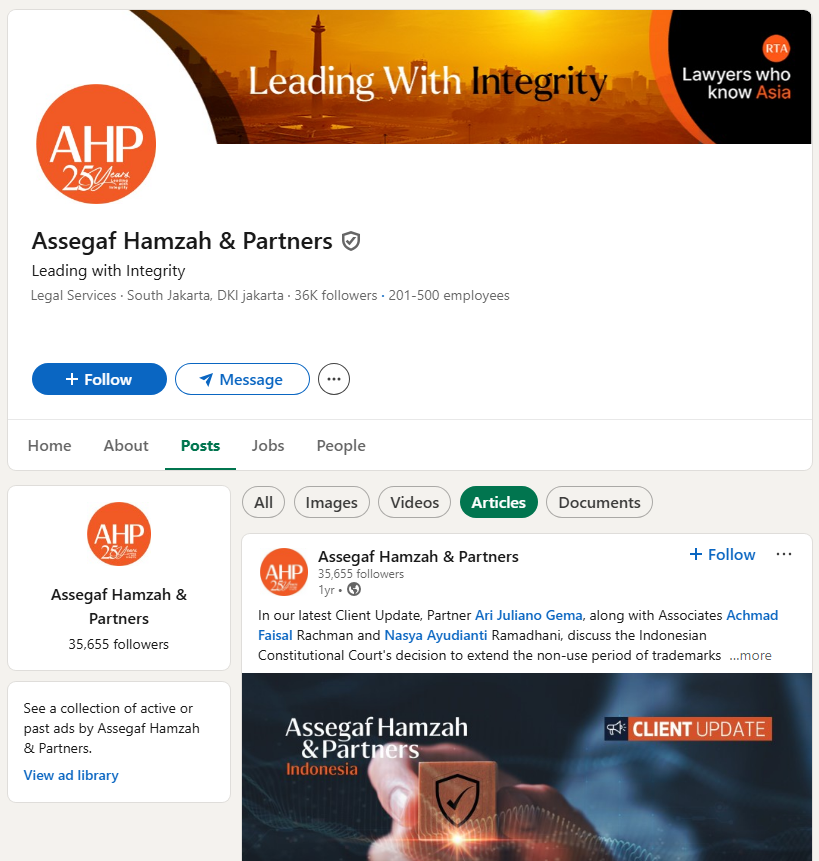
Law firms need to establish a sharp specialization as the primary foundation of their identity in the market. Avoiding a business model that caters to all types of legal matters will convey a deeper sense of professionalism to potential clients. Solid branding usually stems from mastery of a specific market niche, such as mining law or intellectual property rights. Producing quality content is the most effective means of elegantly demonstrating a firm's intellectual capacity. Writing opinion articles, scholarly journal articles, and case analyses on LinkedIn or the firm's official website is a highly recommended strategic move. This method allows the public to directly assess the quality of practitioners' thinking through regularly presented literature.
The relationship between individual image and professionalism. The reputation and image of an institution play a crucial role in the legal services industry. A law firm's reputation rests on the credibility of its partners. Building a personal brand independently by each advocate has a significant positive impact on strengthening the firm's reputation. The synergy between individual expertise and the institution's reputation automatically creates a strong appeal to the public. Through this combination of strategies, a law firm can build a strong position without violating regulations regarding excessive promotion.
Reputation is the Highest Currency
Reputation is the highest currency in the legal industry ecosystem worldwide. A strong reputation is consistently a key factor in determining a law firm's long-term revenue. Law firms that choose to focus on a serious brand-building strategy will attract a higher-quality and more loyal client base. These justice-seekers choose to work with the firm out of respect for the competence and integrity that emanate from the firm's image.
These high-quality clients highly value professionalism and are willing to provide fair compensation for the legal services they receive. Their decisions are based on pure trust and reject the temptation of advertising, relying on bombastic marketing techniques or offering low prices that undermine the profession. Investing in reputation ultimately ensures the firm's business sustainability while consistently upholding the honor of the legal profession in the eyes of the wider public.
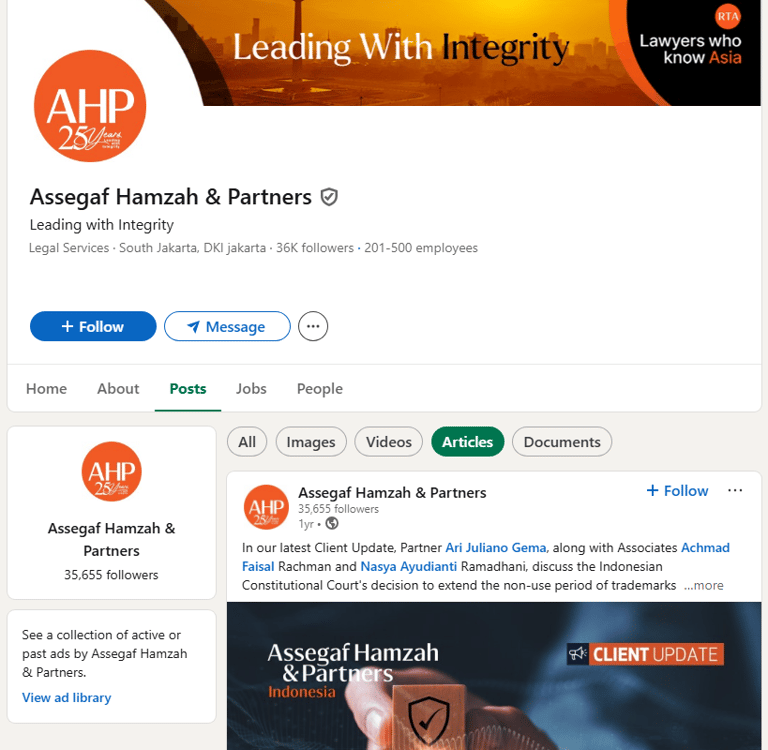
View of law firm Assegaf Hamzah & Partners on LinkedIn
Contact
Contact us for professional marketing services
Telephone
© 2026. All rights reserved.